You finish a meal.
Your stomach feels full.
Table of Contents
ToggleAn hour later, you’re back in the kitchen.
Not because you’re bored.
Not because you saw a dessert advertisement.
But because you genuinely feel hungry again.
For many people, this becomes a daily struggle.
Breakfast doesn’t last until lunch.
Lunch barely lasts until evening.
And no matter how much they eat, satisfaction seems temporary.
Most people assume this means they need more food.
Sometimes that’s true.
But often the real issue isn’t how much you’re eating.
It’s how your body is responding to what you’re eating.
Hunger shortly after meals is often a clue that something deeper is happening beneath the surface.
Understanding those signals can help you stop fighting your appetite and start working with it.
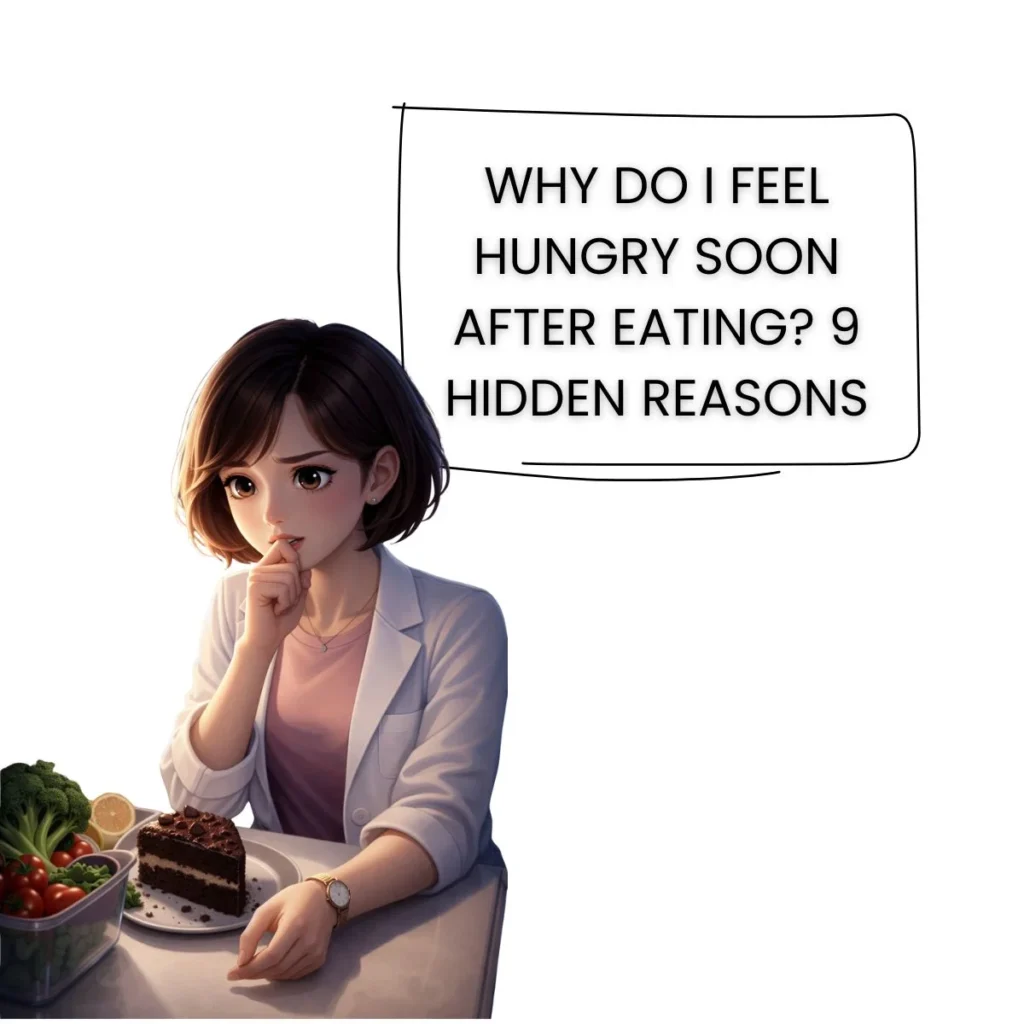
Why Do I Feel Hungry Soon After Eating? The Short Answer
Feeling hungry shortly after a meal can happen for several reasons. Common causes include meals that are low in protein, blood sugar fluctuations, insulin resistance, poor sleep, chronic stress, inadequate fiber intake, emotional eating, and disruptions in hunger hormones such as leptin and ghrelin. In many cases, persistent hunger is not simply about eating more food—it’s about improving how the body regulates appetite and energy.
Quick Overview
Possible Cause | How It Increases Hunger |
Low Protein Intake | Reduced satiety |
Insulin Resistance | Poor appetite regulation |
Blood Sugar Swings | Rapid return of hunger |
Poor Sleep | Increased hunger hormones |
Chronic Stress | Elevated cortisol |
Low Fiber Intake | Faster digestion |
Emotional Eating | Appetite confusion |
Processed Foods | Poor satiety signals |
Hunger Hormone Imbalance | Increased appetite |
Hunger Is Not Always About an Empty Stomach
One of the biggest misconceptions about appetite is the belief that hunger is controlled entirely by stomach fullness.
It isn’t.
Hunger is regulated by a complex communication network involving:
- the brain
- the digestive system
- hormones
- blood sugar
- stress signals
- sleep quality
- energy stores
This explains why two people can eat identical meals and experience completely different levels of hunger afterward.
The body is not counting calories.
The body is interpreting signals.
Your Meal May Not Be Satisfying Enough
Many modern meals are surprisingly poor at creating satiety.
A typical breakfast may include:
- toast
- cereal
- juice
- tea
Although calories are present, the meal may lack the nutrients that help keep hunger controlled.
Particularly protein.
Protein is one of the strongest appetite-regulating nutrients available.
People who consistently eat inadequate protein often notice:
- earlier hunger
- more snacking
- stronger cravings
difficulty maintaining fasting schedules
The issue isn’t always eating too little.
Sometimes it’s eating too little of the right foods.
Blood Sugar May Be Rising and Falling Too Quickly
Have you ever noticed feeling hungry soon after eating sweets, biscuits, breakfast cereals, or bakery foods?
Blood sugar fluctuations may be part of the explanation.
Meals high in refined carbohydrates can cause blood sugar to rise rapidly.
The body responds by releasing insulin.
When blood sugar later falls, hunger often returns.
Many people interpret this as a need for more food.
In reality, the issue may be unstable blood sugar regulation.
The cycle can look like this:
- Rapid carbohydrate intake
- Blood sugar spike
- Insulin release
- Blood sugar drop
- Return of hunger
- Repeat
This pattern often continues throughout the day.
Insulin Resistance Can Make Hunger Worse
One of the most overlooked causes of persistent hunger is insulin resistance.
When cells become less responsive to insulin, energy regulation becomes less efficient.
The body may continue sending hunger signals even when adequate energy is available.
Many people with insulin resistance experience:
- frequent hunger
- strong cravings
- difficulty losing weight
- fatigue after meals
- increased abdominal fat
This is one reason appetite often improves when insulin sensitivity improves.
For a deeper understanding, read Insulin Resistance Explained: How Fasting Restores Sensitivity.
Hunger Hormones May Be Driving Your Appetite
Two hormones play a major role in appetite regulation:
- ghrelin
- leptin
- Ghrelin encourages hunger.
- Leptin helps create feelings of fullness.
When these signals function properly, eating feels natural and balanced.
When they become disrupted, people may feel hungry more often than expected.
This is particularly common in individuals experiencing:
- poor sleep
- chronic stress
- obesity
- insulin resistance
- irregular eating patterns
To understand these hormones more deeply, read Leptin Vs Ghrelin: The Hormones That Control Hunger.
Poor Sleep Can Increase Hunger the Next Day
Many people underestimate how strongly sleep affects appetite.
One poor night’s sleep can influence:
- food choices
- hunger levels
- cravings
- satiety
Research consistently shows that inadequate sleep can increase hunger while reducing feelings of fullness.
This is why many people crave more food after sleeping poorly.
The problem isn’t a lack of discipline.
The body is responding to altered hormonal signals.
Stress Changes Appetite More Than Most People Realize
Stress affects much more than emotions.
It also affects metabolism.
When stress becomes chronic, cortisol levels often increase.
This can influence:
- hunger
- cravings
- food choices
- fat storage
Many people notice stronger hunger during stressful periods even when their activity level has not changed.
This is one reason appetite often improves when stress improves.
For more insight, read Cortisol: The Stress Hormone That Quietly Controls Your Weight, Energy & Healing.
You May Not Be Eating Enough Fiber
Fiber slows digestion.
It helps food remain in the digestive system longer.
It also contributes to feelings of fullness after meals.
Meals lacking fiber often digest quickly.
The result?
Hunger returns sooner.
Vegetables, legumes, fruits, nuts, and seeds can all contribute to improved satiety.
Processed Foods Often Leave People Hungry
Many highly processed foods are engineered for taste.
Not satiety.
People often consume large amounts of:
- chips
- biscuits
- sweetened beverages
- packaged snacks
without experiencing lasting fullness.
These foods may provide calories.
But they often fail to provide sustained appetite control.
This creates a cycle of eating more while feeling less satisfied.
Emotional Needs Can Be Mistaken for Hunger
Not all hunger is physical.
Sometimes the urge to eat is driven by:
- stress
- boredom
- loneliness
- anxiety
- habit
- The sensation feels real.
But food is being used to solve an emotional problem rather than an energy problem.
This is one reason many people struggle with constant grazing throughout the day.
If this sounds familiar, read Emotional Eating vs True Hunger: How to Tell the Difference.
How Vaidikway Understands Persistent Hunger
At Vaidikway, we rarely see persistent hunger as a simple willpower issue.
When someone says:
“I feel hungry all the time.”
The real question becomes:
Why?
We look at:
- meal composition
- protein intake
- insulin resistance
- sleep quality
- stress levels
- hunger hormones
- eating patterns
Because hunger is often a symptom.
Not the root problem.
When the underlying cause improves, appetite frequently becomes easier to manage naturally.
Can Intermittent Fasting Help?
Many people are surprised to discover that properly implemented fasting may improve appetite control over time.
Initially, fasting can feel challenging.
But as the body adapts, many people notice:
- reduced cravings
- more stable hunger
- improved energy
- better awareness of true hunger
This may occur because fasting can help improve insulin sensitivity and metabolic flexibility.
For more on this topic, read How Fasting Reduces Hunger and Cravings.
Common Mistakes That Keep You Hungry
One common mistake is focusing only on calories while ignoring food quality.
Another is skipping protein-rich foods.
Many people also underestimate the effects of poor sleep and chronic stress.
Others rely heavily on processed foods while expecting long-lasting fullness.
The body responds to more than calories alone.
It responds to nutrient quality, hormones, sleep, and metabolic health.
When Should You Seek Professional Help?
Persistent hunger deserves attention if it is accompanied by:
- unexplained weight gain
- prediabetes
- type 2 diabetes
- severe cravings
- frequent overeating
- fatigue after meals
- difficulty controlling appetite
In these situations, professional guidance may help identify underlying metabolic issues.
Frequently Asked Questions
Is it normal to feel hungry one hour after eating?
Occasionally, yes. However, frequent hunger shortly after meals may indicate issues with meal composition, blood sugar regulation, or appetite hormones.
Does insulin resistance cause hunger?
It can. Many people with insulin resistance experience increased hunger, cravings, and difficulty feeling satisfied after meals.
Why am I hungry after eating carbohydrates?
Refined carbohydrates can cause blood sugar fluctuations that may lead to the return of hunger sooner than expected.
Does protein help reduce hunger?
Yes. Protein is one of the most satiating nutrients and often helps people stay full longer.
Can poor sleep make me hungry?
Absolutely. Poor sleep can alter hunger-regulating hormones and increase appetite the following day.
Why do I feel hungry even after a large meal?
Meal size is not the only factor affecting satiety. Protein, fiber, hormones, insulin sensitivity, and stress levels all influence appetite.
Can fasting improve appetite control?
Many people report improved appetite regulation after adapting to intermittent fasting.
What This Means for You
Feeling hungry soon after eating is not always a sign that you need more food.
In many cases, it is a signal worth investigating.
The cause may be low protein intake.
It may be poor sleep.
It may be insulin resistance.
It may be stress.
Or it may be a combination of several factors working together.
The goal is not to suppress hunger.
The goal is to understand it.
Because when you understand why hunger keeps returning, you stop fighting your body and start giving it what it actually needs.
And that is often where lasting change begins.