Many people believe they struggle with hunger.
But when they pause and look closely, they discover something surprising.
Table of Contents
ToggleThey weren’t hungry at all.
They were stressed.
Or bored.
Or lonely.
Or frustrated.
Or exhausted.
Food was simply the easiest available solution.
This is one of the most important lessons anyone pursuing better health can learn.
Not all hunger is true hunger.
Some hunger comes from the body.
Some hunger comes from emotions.
And understanding the difference can completely change your relationship with food.
Because when emotional eating is mistaken for physical hunger, weight loss becomes harder, fasting becomes more difficult, and cravings often feel impossible to control.
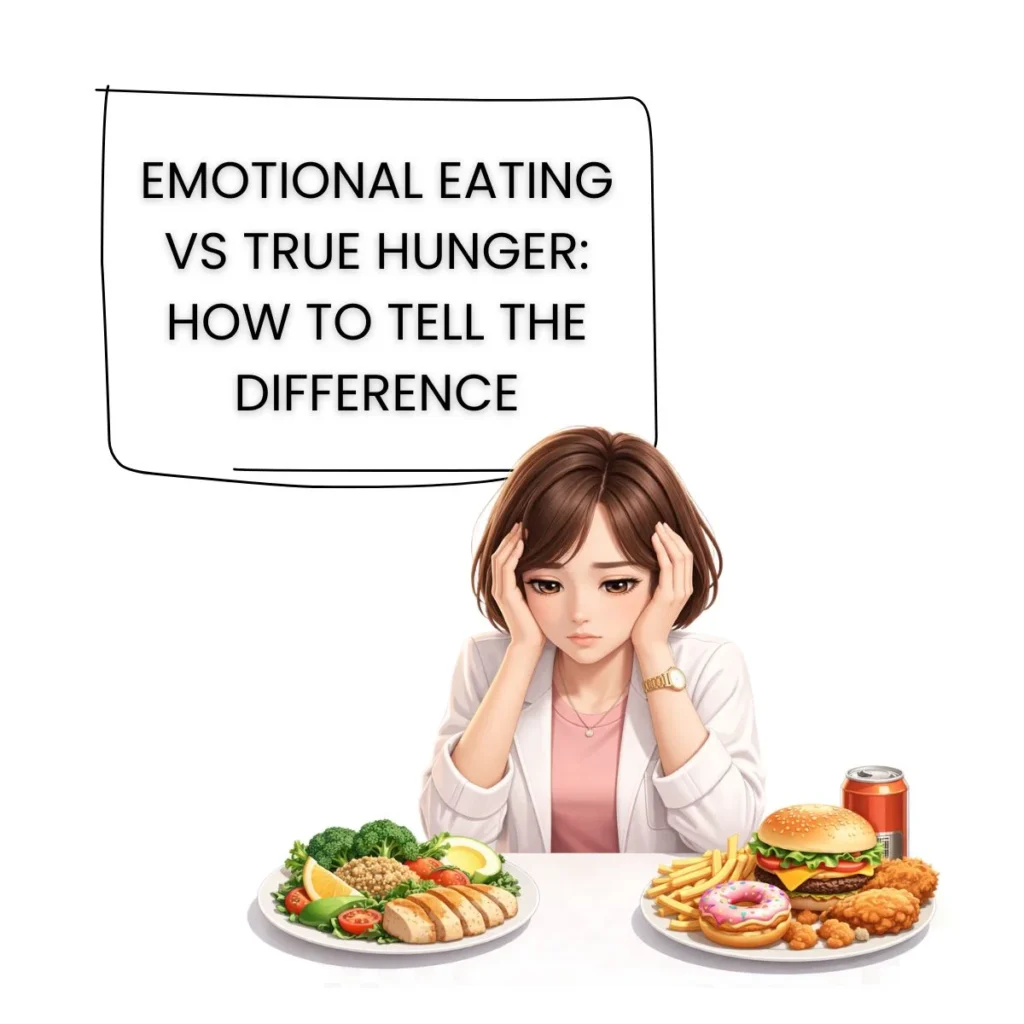
What Is True Hunger?
True hunger is the body’s biological request for energy.
It develops gradually.
It is driven by physiological signals.
When genuine hunger appears, the body is asking for nourishment.
True hunger often develops:
- slowly
- predictably
- after several hours without food
- regardless of the specific food available
When you’re truly hungry, a simple healthy meal sounds appealing.
You don’t necessarily need cookies.
Or pizza.
Or chips.
Food itself is enough.
What Is Emotional Eating?
Emotional eating happens when food is used to manage feelings rather than hunger.
The body may not need energy.
But the mind wants relief.
Food temporarily provides:
- comfort
- distraction
- pleasure
- escape
- stress reduction
The challenge is that emotional hunger feels real.
The craving is genuine.
The urge is powerful.
But the need isn’t actually nutritional.
The need is emotional.
Quick Comparison: Emotional Eating vs True Hunger
True Hunger | Emotional Eating |
Develops gradually | Appears suddenly |
Can wait a little while | Feels urgent |
Any food sounds acceptable | Specific foods are desired |
Stops when satisfied | May continue despite fullness |
Physical sensation | Emotional trigger |
Driven by energy needs | Driven by feelings |
Ends after eating | Often returns quickly |
This table alone helps many people identify patterns they have never noticed before.
Signs You’re Experiencing True Hunger
True hunger often feels like:
- gradual stomach emptiness
- mild hunger building over time
- reduced energy
- increased interest in food generally
- willingness to eat a balanced meal
True hunger is patient.
It doesn’t usually scream.
It simply asks.
Signs You’re Experiencing Emotional Eating
Emotional eating often feels like:
- sudden cravings
- intense urgency
- wanting specific comfort foods
- eating despite physical fullness
- guilt after eating
- eating to change your mood
These signals are often connected to emotional triggers rather than energy needs.
Common Emotional Eating Triggers
Many people assume emotional eating only happens during stress.
In reality, many emotions can trigger eating.
Stress
Food temporarily provides comfort and distraction.
Boredom
Eating creates stimulation.
Loneliness
Food becomes companionship.
Anxiety
Eating temporarily reduces discomfort.
Frustration
Food becomes an emotional release.
Fatigue
The brain seeks quick energy and pleasure.
Understanding your personal triggers is one of the most powerful steps toward change.
Why Stress Makes Emotional Eating Worse
Stress influences hormones.
When stress rises:
- cortisol increases
- cravings increase
- appetite often changes
Many people find themselves eating foods they normally wouldn’t choose.
Not because they lack discipline.
But because stress changes appetite regulation.
To understand this process better, read Cortisol: The Stress Hormone That Quietly Controls Your Weight, Energy & Healing.
Once people understand cortisol, many eating behaviors suddenly make more sense.
Why Emotional Eating Feels So Powerful
Food affects the brain.
Especially highly processed foods.
They can temporarily increase feelings of pleasure and comfort.
This creates a short-term reward.
The problem is that emotional discomfort often returns.
Which leads to:
emotion → eating → temporary relief → emotion → eating
The cycle repeats.
The issue is not weakness.
The issue is that food has become a coping mechanism.
How Hunger Hormones Influence Cravings
Not all cravings are emotional.
Sometimes biology is involved.
Hormones such as leptin and ghrelin help regulate:
- hunger
- fullness
- appetite
- meal timing
When these signals become disrupted, cravings often increase.
This is why understanding hunger hormones matters.
For a deeper explanation, read Leptin vs Ghrelin: The Hormones That Control Hunger.
The 10-Minute Pause Technique
One of the simplest ways to identify emotional eating is to pause.
When a craving appears, ask:
Am I Physically Hungry?
Or
Am I Emotionally Uncomfortable?
Then wait 10 minutes.
During those 10 minutes:
- drink water
- take a short walk
- breathe deeply
- identify your emotional state
If the craving disappears, emotional hunger may have been driving it.
If hunger remains, your body may genuinely need food.
Questions to Ask Yourself Before Eating
When cravings appear, ask:
Would I Eat a Simple Meal Right Now?
If the answer is yes, it may be true hunger.
If the answer is:
“I only want chocolate.”
or
“I only want chips.”
it may be emotional eating.
What Emotion Am I Feeling?
Many people discover they are:
- stressed
- bored
- overwhelmed
- lonely
rather than hungry.
Awareness creates choice.
Why Fasting Can Reveal Emotional Eating
Many people discover emotional eating for the first time while fasting.
Without constant access to food, emotional patterns become easier to notice.
This can feel uncomfortable initially.
But it can also be transformative.
Fasting doesn’t create emotional eating.
It often reveals it.
This is one reason many people learn more about themselves during fasting than they expected.
If you’re working toward long-term success, read How to Make Fasting a Lifestyle (Not Just a Diet).
What Emotional Eating Is Not
Emotional eating is not:
- weakness
- laziness
- lack of discipline
- personal failure
Most people developed these patterns for a reason.
Food provided comfort.
Relief.
Distraction.
Safety.
The goal is not self-criticism.
The goal is awareness.
Healthy Alternatives to Emotional Eating
Food is not the only way to regulate emotions.
Alternative coping tools include:
- walking
- journaling
- meditation
- calling a friend
- exercise
- creative hobbies
- deep breathing
The goal is not perfection.
The goal is expanding your options.
Common Emotional Eating Scenarios
Situation | Likely Trigger |
Late-night snacking | Stress or fatigue |
Eating after an argument | Emotional discomfort |
Craving sweets after work | Stress relief |
Constant kitchen visits while bored | Stimulation seeking |
Weekend overeating | Habit and reward patterns |
Recognizing these situations helps break automatic behaviors.
Signs Your Relationship With Food Is Improving
Positive signs include:
✔ pausing before eating
✔ recognizing emotional triggers
✔ fewer impulsive eating episodes
✔ less guilt around food
✔ improved awareness
✔ more confidence around hunger
These changes often appear before significant weight loss.
But they may be even more valuable.
Frequently Asked Questions
How do I know if I’m emotionally eating?
If the urge to eat appears suddenly, is linked to emotions, or involves specific comfort foods, emotional eating may be involved.
Can emotional eating happen even when I’m full?
Yes.
Emotional eating is often driven by feelings rather than physical hunger.
Why do I crave sweets when stressed?
Stress hormones can influence appetite and increase cravings for highly rewarding foods.
Does fasting cause emotional eating?
Not usually.
Fasting often reveals emotional eating patterns that were already present.
Can emotional eating prevent weight loss?
Yes.
Repeated emotional eating episodes can make it difficult to maintain consistent nutrition habits.
Is emotional eating normal?
Very normal.
Most people experience emotional eating at some point.
The goal is awareness, not perfection.
Many people spend years trying to control food without understanding what is driving their eating behavior.
They focus on calories.
Portions.
Meal plans.
Yet the real challenge often has nothing to do with food.
Sometimes the real challenge is stress.
Loneliness.
Exhaustion.
Or simply a habit that developed over years.
When you learn to distinguish emotional eating from true hunger, something powerful happens.
Food becomes clearer.
Hunger becomes easier to understand.
And the constant battle with cravings often begins to soften.
Because sometimes the most important question isn’t:
“What should I eat?”
It’s:
“What do I actually need right now?”