When Effort and Results Don’t Match
Many people reach a point where they genuinely try to control their food. Portions are reduced. Obvious junk is avoided. Meals feel lighter than before.
Table of Contents
ToggleStill, the weight does not reduce.
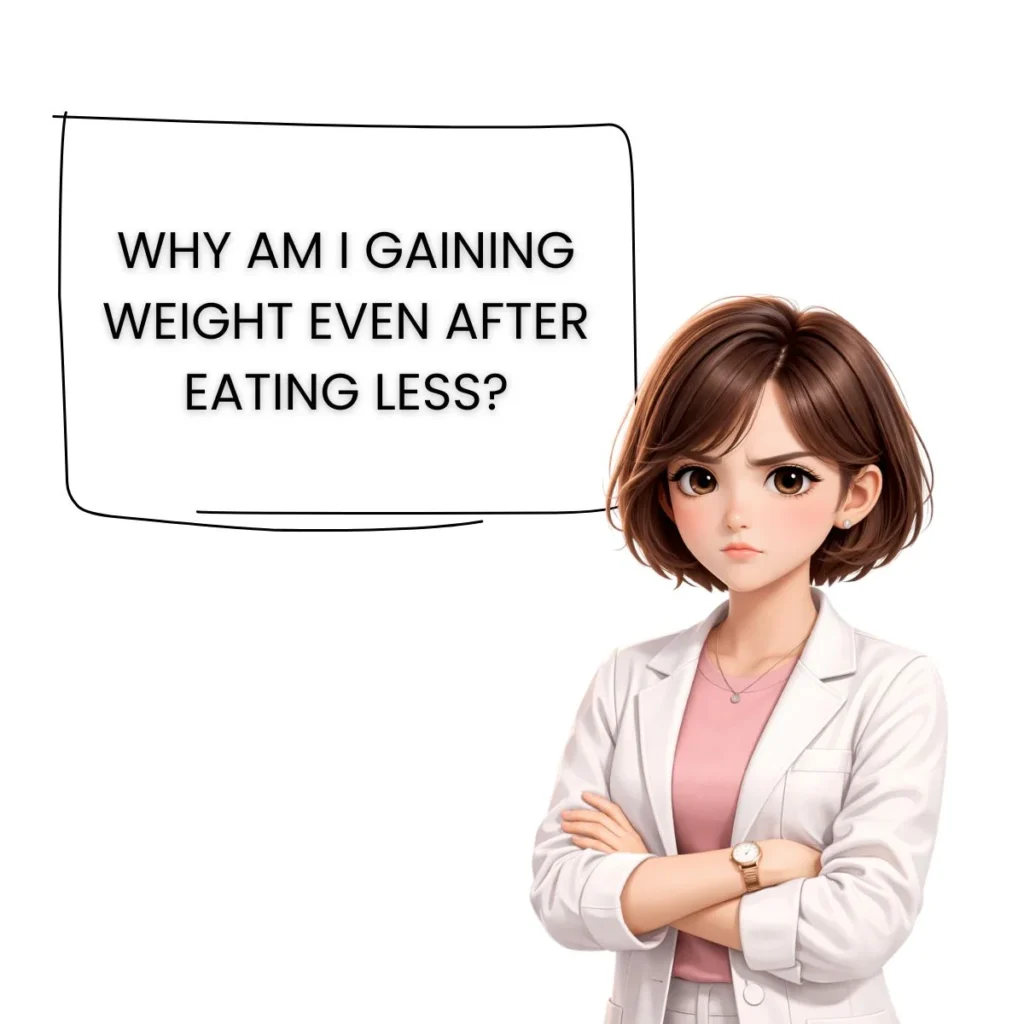
Sometimes it stays exactly the same. Sometimes it even increases slowly over time. This creates a very specific kind of frustration, because the effort feels real but the result does not reflect it.
At this stage, most people start doubting themselves. They feel they must be doing something wrong. Either they assume they are unknowingly overeating, or they believe their discipline is not strong enough.
But in many cases, the issue is not lack of effort. It is a mismatch between what the body needs and what approach is being followed.
Why the “Eat Less” Approach Stops Working
The idea of eating less to lose weight sounds logical. It is simple and easy to understand.
But the body is not a passive system that just follows input and output. It actively adapts.
When you consistently reduce your food intake, the body does not always respond by burning more fat. Instead, it often shifts into a conservation mode.
It tries to protect itself.
This means:
- Energy expenditure reduces
- Metabolic rate slows down
- Physical activity may feel more tiring
So even though you are eating less, your body is also using less.
This is one of the main reasons why weight loss slows down or stops completely.
The Role of Hormones in Weight Gain
Weight is not controlled only by calories. Hormones play a central role, and among them, insulin is one of the most important.
Insulin decides how your body handles energy after you eat.
It influences whether:
- Energy is used immediately
- Or stored for later
When insulin levels are balanced, the body can shift between using food and using stored fat.
But when insulin stays elevated for long periods, the body prefers storage.
Fat breakdown becomes difficult.
Even if you reduce food intake, the body does not easily switch to burning stored fat.
How This Pattern Builds Over Time
This situation usually does not start suddenly. It develops gradually.
Frequent eating, repeated intake of refined carbohydrates, and lack of gaps between meals all contribute.
Over time:
- Insulin is released more often
- The body gets used to constant supply of food
- Cells respond less efficiently
This leads to a state where energy handling becomes unstable.
At this point, simply reducing food does not restore balance.
Your Body May Still Be in Storage Mode
One of the key reasons for weight gain despite eating less is that the body remains in storage mode.
When insulin levels are frequently high, the body is continuously receiving a signal to store fat.
At the same time, the process of breaking down stored fat is suppressed.
So even if you are eating less, your body is not easily accessing its stored energy.
This creates a situation where:
- Fat is stored efficiently
- But not released efficiently
This imbalance makes weight loss difficult.
Metabolic Slowdown Is Real
When the body senses reduced food intake, it adapts by slowing down.
This is a protective response.
You may notice:
- Feeling colder than usual
- Reduced energy
- Less spontaneous movement
These are signs that your body is conserving energy.
As metabolism slows, the number of calories your body burns also decreases.
So, the gap between intake and usage becomes smaller than expected.
This is why eating less does not always translate into weight loss.
Loss of Muscle Changes the Equation
If food intake is reduced without proper balance of nutrients, the body may start using muscle for energy.
Muscle plays a key role in metabolism. It helps the body burn energy efficiently.
When muscle mass reduces:
- Metabolic rate drops further
- Fat loss becomes slower
- Weight regain becomes easier
So even if the scale changes slightly, the quality of weight loss is not ideal.
Frequent Eating Prevents Fat Burning
Many people follow a pattern of eating small meals throughout the day.
The intention is often good. It is believed to keep metabolism active.
But frequent eating keeps insulin levels elevated.
There is no real gap where insulin can fall.
Without that drop, the body does not shift into fat-burning mode.
So even if total food is less, the timing prevents effective fat use.
Small Things That Add Up
Sometimes the issue is not the main meals, but the small additions throughout the day.
These may include:
- Multiple cups of tea with sugar
- A few biscuits here and there
- Small packaged snacks
Each of these may seem insignificant on its own.
But together, they keep triggering insulin again and again.
This keeps the body in a fed state, even if the overall quantity of food is not very high.
Insulin Resistance Makes It Harder
As insulin resistance develops, the situation becomes more complex.
The body produces more insulin to manage the same amount of glucose.
Higher insulin levels push the body further into fat storage mode.
At the same time, energy is not delivered efficiently to the cells.
This leads to:
- Increased fat storage
- Reduced fat burning
- Unstable energy levels
This is why weight gain can happen even when eating patterns seem controlled.
If you want to understand this mechanism clearly, read:
“Insulin Resistance Explained: How Fasting Restores Sensitivity”
Why Calorie Reduction Alone Feels Incomplete
When the focus is only on reducing calories, an important part of the picture is missed.
Calorie reduction does not directly correct:
- Insulin imbalance
- Metabolic inflexibility
- Energy regulation issues
So, while effort is being made, the underlying system remains unchanged.
This is why results feel inconsistent.
What Actually Needs to Change
The focus needs to shift from just reducing food to improving how the body uses energy.
This includes:
- Allowing gaps between meals
- Reducing constant insulin stimulation
- Supporting metabolic flexibility
When the body regains the ability to switch between using food and stored energy, weight management becomes easier.
How Fasting Supports This Shift
Fasting introduces a period where no food is coming in.
During this time, insulin levels begin to decrease.
As insulin falls, the body starts accessing stored fat for energy.
This is a natural process, but it requires time without food.
With regular fasting:
- The body becomes better at using stored energy
- Insulin sensitivity improves
- Fat burning becomes more efficient
This creates a more stable and sustainable path for weight loss.
A More Useful Way to Understand Weight Gain
Instead of looking at weight gain as simply eating too much, it can be more helpful to see it as a problem of energy handling.
The question becomes:
Is the body able to use energy properly?
If the answer is no, then reducing food alone will not solve the issue.
The system itself needs to be corrected.
When to Pay Attention
If you notice that:
- Weight is increasing despite controlled eating
- Progress has stopped for a long time
- Fat is mainly accumulating around the abdomen
then it is important to look deeper.
These patterns usually indicate that the body is not functioning in a balanced way.
What This Means for You
If you are experiencing this, it does not mean your efforts are useless.
It means your body needs a different approach.
Once the internal signals are aligned, the same effort can start giving better results.
Weight loss then becomes less about constant struggle and more about restoring balance.