
Most people think stress lives in the mind.
But in reality, stress lives in the body.
Table of Contents
ToggleAnd the hormone carrying that stress message to every cell is called cortisol.
If you’ve ever wondered why:
- Your belly fat refuses to go
- Your energy crashes despite “healthy eating”
- You wake up tired even after sleep
- Fasting sometimes feels amazing… and sometimes exhausting
There is a high chance cortisol is involved.
Let’s understand this calmly — without fear, without blame — because cortisol is not a bad hormone.
It is a survival hormone.
The problem begins when survival becomes permanent.
What Is Cortisol, Really?
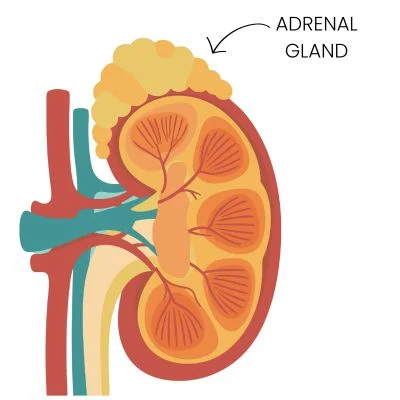
Cortisol is produced by your adrenal glands, which sit quietly above your kidneys.
Its job is simple:
To help you respond to stress.
Cortisol:
- Raises blood sugar when energy is needed
- Mobilizes stored fuel
- Keeps you alert
- Helps regulate blood pressure and inflammation
In short, cortisol helps you handle life.
Without cortisol, you wouldn’t survive a single stressful moment.

Why Cortisol Becomes a Problem in Modern Life
Our bodies were designed for short stress, not constant stress.
Earlier stress looked like:
- Hunger
- Cold
- Physical danger
Stress would rise → problem solved → cortisol would fall.
Today, stress looks like:
- Constant notifications
- Emotional pressure
- Overthinking
- Poor sleep
- Frequent eating
- Fear of weight gain
- Guilt around food
So cortisol stays elevated, quietly, daily.
This is where healing gets blocked.
High Cortisol and the Body: What Really Happens
When cortisol stays high for long periods, the body shifts into protection mode.
Here’s what it does — not because it wants to harm you, but because it wants to keep you alive.
It tells the body:
- “Store fat — especially around the belly”
- “Hold on to glucose”
- “Slow down repair”
- “Pause healing”
- “Stay alert, don’t rest”
This is why chronic stress often leads to:
- Belly fat gain
- Insulin resistance
- Poor digestion
- Hormonal imbalance
- Poor sleep
- Anxiety and irritability
The body is not failing.
It is defending.
Cortisol and Belly Fat: The Hidden Relationship
Belly fat is not random.
Visceral fat has more cortisol receptors than fat in other areas.
So when cortisol rises:
- Fat storage is directed toward the abdomen
- Fat breakdown in that area is blocked
- Muscle breakdown may increase instead
This is why:
- You can eat less but still gain belly fat
- You can exercise more but feel softer
- You can fast incorrectly and feel worse
Cortisol decides where fat goes.
Cortisol, Insulin & Blood Sugar: A Loop
Cortisol and insulin are deeply connected.
When cortisol rises:
- Blood sugar increases
- Insulin is released
- Fat storage increases
- Insulin resistance worsens
When insulin resistance increases:
- The body becomes more stressed
- Cortisol rises further
This creates a vicious cycle.
Breaking this cycle is not about eating less.
It is about restoring rhythm.
Cortisol and Sleep: Why You Feel “Tired but Wired”
Many people say:
“I’m exhausted all day… but at night my mind won’t stop.”
That is cortisol speaking at the wrong time.
Healthy cortisol rhythm looks like:
- High in the morning (energy, focus)
- Gradually falling through the day
- Low at night (sleep, repair)
Chronic stress flips this rhythm.
Cortisol becomes:
- Low in the morning → fatigue
- High at night → insomnia
Without sleep, healing stops.
Without healing, cortisol rises further.
Again — a loop.
Cortisol and Fasting: Friend or Enemy?
This is where confusion begins.
People hear:
“Fasting increases cortisol.”
That statement is incomplete.
Short, intentional fasting:
- Reduces insulin
- Improves metabolic flexibility
- Often lowers baseline stress over time
But improper fasting:
- Fasting too long
- Fasting with poor nutrition
- Fasting while already stressed
- Fasting without recovery
can increase cortisol excessively.
The difference is not fasting itself —
the difference is how, when, and for whom.
Why Some People Feel Calm While Fasting
You may have noticed:
- Some people feel mentally clear while fasting
- Others feel anxious or shaky
This depends on:
- Stress levels
- Sleep quality
- Nutrient status
- Metabolic health
- Emotional relationship with food
When fasting is aligned with the body’s rhythm:
- Cortisol normalizes
- The nervous system relaxes
- Hunger hormones stabilize
When fasting is forced:
- Cortisol spikes
- The body resists
- Healing pauses
This is why personalization matters.
Signs Your Cortisol May Be Out of Balance
Not everyone feels “stressed” emotionally.
Cortisol imbalance often shows up quietly as:
- Belly fat that won’t reduce
- Cravings, especially at night
- Afternoon energy crashes
- Light sleep or frequent waking
- Feeling overwhelmed easily
- Hair thinning
- Slow recovery from illness
These are not failures.
They are signals.
Healing Cortisol Is Not About “Relaxing More”
Telling a stressed body to “relax” doesn’t work.
Healing cortisol requires:
- Predictable eating windows
- Digestive rest
- Proper nourishment
- Stable sleep timing
- Emotional safety
- Gentle discipline, not extremes
This is why random diet plans fail.
Your body doesn’t need pressure.
It needs consistency.
Why Chronic Metabolic Conditions Struggle to Heal Without Addressing Cortisol
Conditions like:
- Diabetes
- PCOS
- Thyroid imbalance
- Fatty liver
- Chronic fatigue
do not exist in isolation.
Cortisol is often the background noise preventing recovery.
You can take supplements.
You can follow food lists.
But if cortisol remains high, healing stays slow.
A Different Way to Look at Stress
Instead of asking:
“How do I reduce stress?”
Ask:
“What does my body not feel safe about?”
Often the answer is:
- Unpredictable eating
- Constant restriction
- Fear of weight gain
- Emotional suppression
- Poor recovery
Healing cortisol is about restoring trust between you and your body.
If you resonate with:
- Stubborn belly fat
- Fatigue despite effort
- Confusion around fasting
- Feeling like your body is “resisting”
It doesn’t mean you need more discipline.
It may mean your body needs a different approach — one that respects stress physiology, not fights it.
At Vaidikway, we work with:
- Fasting rhythms that calm cortisol
- Eating patterns that stabilize hormones
- Gentle metabolic healing
- Sustainable recovery — not pressure
When cortisol heals, everything else begins to follow.